Peptides vs. GLP-1 Medications: Key Differences Women Should Understand
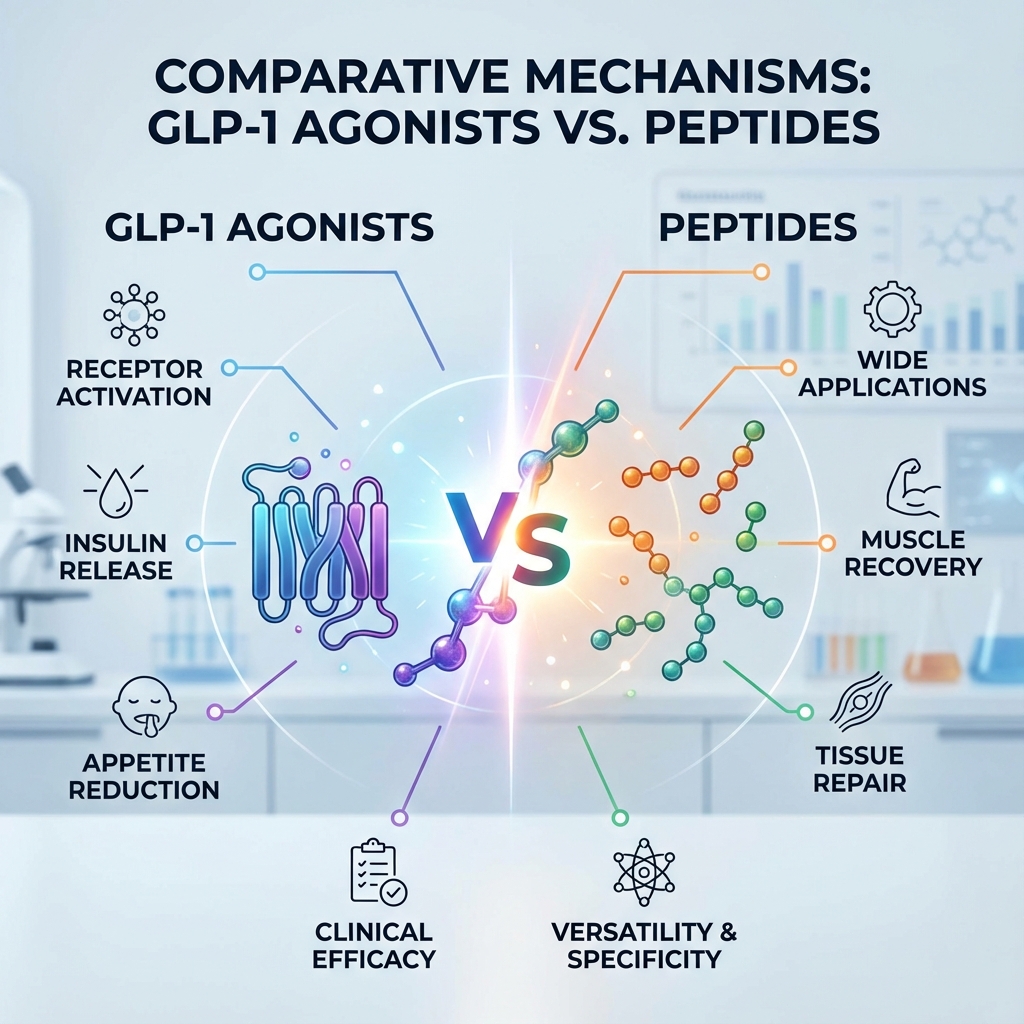
The conversation around weight management has shifted dramatically with the introduction of GLP-1 agonists like Semaglutide (Ozempic, Wegovy) and Tirzepatide (Mounjaro). While these are technically peptides, they are classified as potent prescription medications. This article explores how they differ from other metabolic peptides often discussed in functional health circles.
Classifying the Compounds
It is important to distinguish between high-potency prescription metabolic regulators and other research peptides. Understanding these distinctions helps in having informed conversations with your healthcare provider.
1. GLP-1 receptor agonists
Primary Examples: Semaglutide, Tirzepatide.
Mechanism: These mimic the glucagon-like peptide-1 hormone, signaling the brain to reduce appetite and slowing gastric emptying.
Clinical Context:
- Efficacy: Clinical trials show significant body weight reduction (often 15% or more).
- Considerations: Rapid weight loss can sometimes lead to muscle loss (sarcopenia) or volume loss in the face if nutrition is not monitored. Common side effects include nausea and gastrointestinal distress.
2. Metabolic Research Peptides
Primary Examples: AOD-9604, Tesamorelin, MOTS-c.
Mechanism: These compounds work on different pathways. For example, AOD-9604 is a fragment of the growth hormone molecule studied for its effect on fat metabolism, while Tesamorelin is FDA-approved for specific types of visceral fat reduction in HIV patients.
Clinical Context:
- Focus: Often discussed in the context of body composition (preserving lean mass) rather than just scale weight suppression.
- Intensity: Generally considered to have a milder side effect profile compared to high-dose GLP-1s, but with more modest weight loss outcomes in isolation.
The Concept of "Hybrid Protocols"
Some practitioners in the functional medicine space discuss combining these approaches—often referred to as "hybrid protocols." The theory being explored is whether lower doses of GLP-1s, when supported by other peptides (like BPC-157 for gut support or CJC-1295 for muscle retention), might offer a balanced approach.
Note: These protocols are strictly off-label and should only be considered under the direct supervision of a specialist.
Data is Knowledge. If you are under medical supervision for any of these treatments, tracking your side effects, energy levels, and cycle changes is vital. The PeptidesForWomen App allows you to log these variables to share with your doctor.