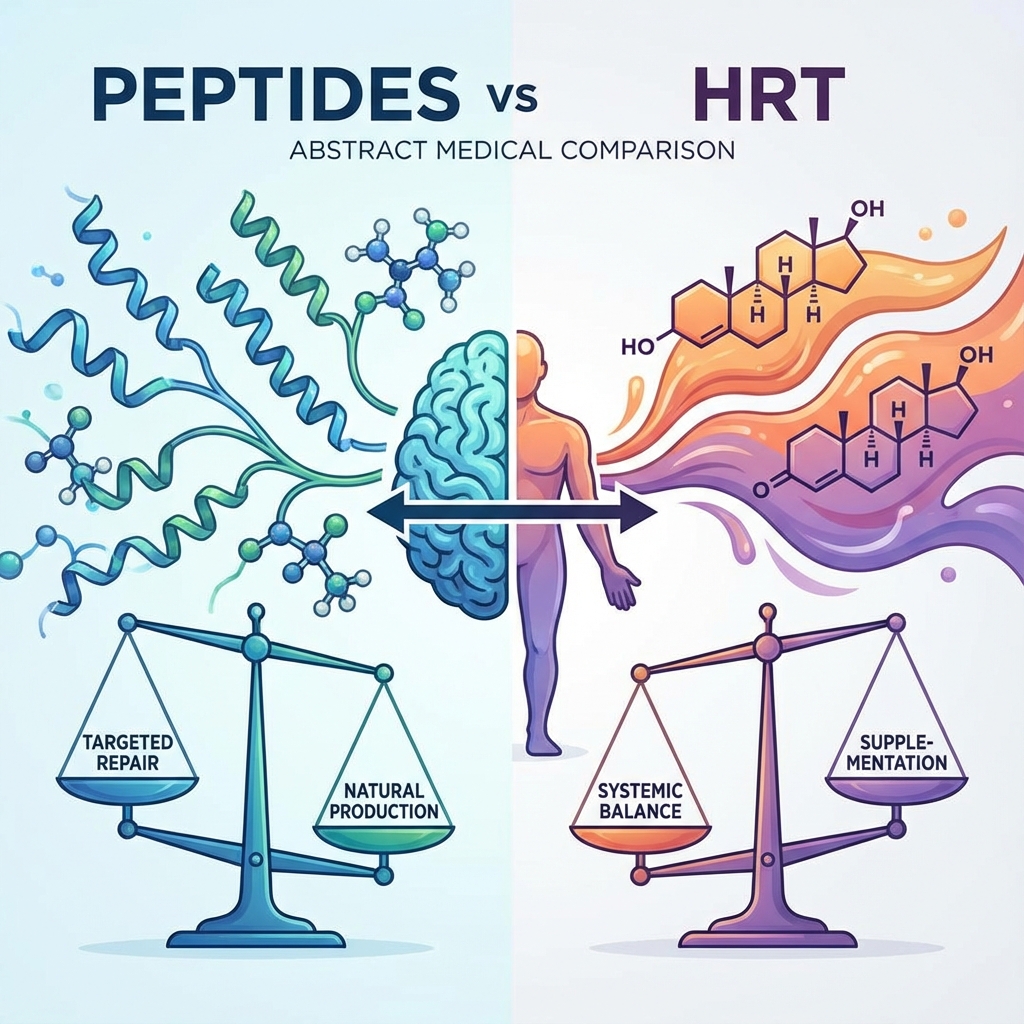
Peptides vs. HRT: Understanding the Difference
As women approach perimenopause and menopause, the conversation often turns to hormones. Specifically, Hormone Replacement Therapy (HRT). But with the rise of peptide therapy, many women are confused. Are they the same thing? Can you do both? Which one is safer?
The Fundamental Difference
The easiest way to understand the difference is to think of HRT as the refuel and Peptides as the mechanics.
- HRT (Hormone Replacement Therapy): Involves introducing exogenous hormones (Estrogen, Progesterone, Testosterone) into the body to replace what your ovaries have stopped producing. You are directly adding chemical messengers.
- Peptide Therapy: Involves introducing amino acid chains that signal your body to produce more of its own natural substances (like Growth Hormone) or to repair cell damage. You are stimulating a specific function.
Comparison at a Glance
| Feature | HRT (Bioidenticals) | Peptide Therapy |
|---|---|---|
| Goal | Restore hormone levels | Signal cellular repair/function |
| Primary Uses | Hot flashes, bone density, libido | Weight loss, injury repair, anti-aging |
| Sourcing | External (Yams, Soy, Lab) | Lab-synthesized amino chains |
| prescription? | Yes, always | Yes (for legitimate sources) |
Can You Use Them Together?
Absolutely. In fact, they are often widely synergistic.
For example, a woman might use HRT (Estrogen/Progesterone) to manage hot flashes and mood swings, while simultaneously using CJC-1295/Ipamorelin (Peptides) to combat the muscle loss and metabolic slowdown that HRT alone might not fully address.
When to Choose Peptides Over HRT
Some women cannot use HRT due to a personal history of hormone-sensitive cancers or clotting disorders. In these cases, peptides offer a non-hormonal pathway to improve quality of life.
For instance, peptides like PT-141 can help with sexual dysfunction without adding testosterone. Peptides like BPC-157 can help with joint pain without steroids.
Conclusion
It is not usually an "either/or" choice. HRT builds the foundation of hormonal health, while peptides optimize specific functions like metabolism, skin quality, and repair. Discussing a comprehensive plan that involves cycle tracking and symptom logging with your functional medicine doctor is the best approach.